
0%

A new genre — wisdom in pictures and stories

Small truths,
made concrete
enough to keep.

Most wisdom evaporates the moment you hear it. Here, each lesson arrives with a picture, a one-liner, an explanation, and a story — four handles so the idea is actually hard to put down.

A note from the editor

Good advice has a way of slipping out the back door the moment life gets loud. "Be kind." "Work hard." "Trust people." Lovely on a poster — gone by lunchtime. So this ledger tries something warmer — every idea arrives with a picture to catch your eye, a one-liner to carry in your pocket, a short explanation to chew on, and a little story to make it stick. Read one. Sit with it. Share it with someone who needs it today.

The Entries

41 of 41

Hover or tap a tag to see why it matters — each one frames a different angle on living well.

    Two hands reaching to help someone up a rocky slope at sunrise
    Plate iOn Generosity

    Greatness measured by who you lift, not by how high you stand alone.

    Entry № 01

    We rise by lifting others.

    Greatness is measured by who you pull up with you.

    The explanation

    The highest position in life is not the one you reach alone. It is the platform you become so that others can stand on it. Helping someone else rise does not diminish your height; it proves you were ever up there at all.

    The story

    There was a senior engineer on my team named Marcus who could have coasted for a decade on the code he'd already written. Instead, when a nervous new grad named Priya joined, he blocked out an hour every evening — 5:30 to 6:30, printed on his calendar — to sit beside her and

    A small lantern glowing warmly in a quiet room
    Plate iiOn Generosity

    Greatness measured by who you lift, not by how high you stand alone.

    Entry № 02

    The light you give is the light you keep.

    Encouragement is not a candle that burns down.

    The explanation

    There is a myth that kindness is a finite resource, that every compliment you give subtracts from what you have. The opposite is true. The light you pass on returns to you as memory, trust, and the knowledge that you made something easier for another person.

    The story

    My grandmother kept an old glass biscuit jar on the corner of her kitchen table. It didn't hold biscuits. It held thank-you notes, birthday cards, and little scraps of paper — sometimes a napkin with a scrawled 'you saved me today, love R.' She'd been collecting them for over

    A gentle hand resting on someone's shoulder in soft light
    Plate iiiOn Kindness

    The compounding interest of small, unrepaid acts of care.

    Entry № 03

    Kindness is a language the deaf can hear and the blind can see.

    Some messages do not need words.

    The explanation

    You can speak the wrong language, forget the name, arrive at the wrong time, and still be understood if your body is kind. A hand on a shoulder, a seat offered, a patient glance — these translate across every barrier we build between us.

    The story

    I was twenty-three, alone in a small mountain town in Georgia — the country, not the state — when I began to feel wrong. My chest hurt, my hands wouldn't stop shaking, and my three words of Georgian evaporated the second I needed them.

    A handwritten note and cup of tea left on a wooden table
    Plate ivOn Kindness

    The compounding interest of small, unrepaid acts of care.

    Entry № 04

    Be the reason someone believes in goodness.

    One small proof can restore a whole worldview.

    The explanation

    People do not lose faith in goodness because of philosophy. They lose it because of small repeated wounds — a door not held, a promise broken, a word ignored. One unexpected kindness can be the counterweight that tips the scale back.

    The story

    It had been the kind of week that makes you quietly wonder if the world is rigged against you. My mother had been diagnosed with something serious, a project I'd worked on for a year was killed in a Tuesday email, and someone had rear-ended my car in a parking lot and driven

    Two people sitting close together in comfortable silence
    Plate vOn Generosity

    Greatness measured by who you lift, not by how high you stand alone.

    Entry № 05

    Your presence is the present someone needs today.

    The best gift is often just showing up.

    The explanation

    We think we need the right words, the right advice, the right plan. Most of the time, a person in pain needs none of these. They need someone willing to occupy the same room, to witness the ache without rushing to fix it. Presence says, 'You are not alone in this,' and that is enough.

    The story

    My sister Lena called me on a Wednesday afternoon and said, in the flat voice she uses when something has broken, 'they let me go.' She had built five years of her life around that job. I was two hours away by car, in the middle of my own workday.

    A lighthouse beam cutting through misty sea air
    Plate viOn Kindness

    The compounding interest of small, unrepaid acts of care.

    Entry № 06

    A warm heart is a lighthouse in any storm.

    Steady warmth is the most reliable signal.

    The explanation

    Storms are not always weather. They are bad news, sudden grief, failure, or a week when nothing works. In those storms, a warm person does not need to solve the problem. They only need to keep their light on so others can find their bearings.

    The story

    The month my father was dying I stopped answering most messages. Grief made everything sound wrong — the advice, the platitudes, the exclamation points. But a colleague named Daniel, whom I barely knew outside of meetings, sent me one short message every single morning.

    A single pebble creating ripples on calm water
    Plate viiOn Action

    Wanting is not enough — you have to go, ask, and step forward.

    Entry № 07

    Small good acts, repeated, change the world.

    The world is not moved by grand gestures alone.

    The explanation

    History books celebrate the single dramatic moment, but the world is mostly rebuilt by small acts done again and again. A door held, a debt forgiven, a sentence of encouragement — these are the pebbles that send ripples farther than we can see.

    The story

    Ms. Alvarez taught fourth grade in a public school where a lot of the kids came in hungry. She kept a wooden bowl of granola bars on the corner of her desk, and every morning, without ceremony, she quietly handed one to three specific children as they walked in — the ones she

    Two hands clasped together, one helping the other rise
    Plate viiiOn Growth

    What we must release — comforts, bonds, identities — in order to rise.

    Entry № 08

    When you help another, you help the future you.

    The help you give today is the help you may need tomorrow.

    The explanation

    Kindness is often described as sacrifice, but it is also investment. The people you help remember. The skills you teach return. The community you build becomes the net you fall into. Helping another is not just good for them; it is a way of building a world that knows how to help you.

    The story

    In my late twenties I gave up a rainy Saturday I badly wanted to keep to help my friend Julia move into a fourth-floor walk-up. I remember being quietly annoyed the whole day — the boxes were too heavy, the stairs were too narrow, the pizza she ordered was cold.

    A small green sprout pushing through dark soil at sunrise
    Plate ixOn Growth

    What we must release — comforts, bonds, identities — in order to rise.

    Entry № 09

    Hope is the courage to begin again.

    Beginning again is not naive; it is brave.

    The explanation

    Hope is not optimism. Optimism expects things to go well. Hope is the decision to keep going even when there is no guarantee. It is the courage to plant, to love, to try, knowing that the ground might stay hard. Hope is the act itself, not the outcome.

    The story

    The spring after her husband died, my neighbor Ruth turned the small patch of dirt behind her house into a vegetable garden. She was seventy-one. She had never grown anything. The first season, the tomatoes came up leggy and pale, then collapsed under their own weight.

    Willow branches bending gracefully over still water at sunset
    Plate xOn Acceptance

    Making peace with what cannot be rewritten so you can live forward.

    Entry № 10

    The world bends toward a gentle soul.

    Softness is not weakness; it is the shape life responds to.

    The explanation

    We are taught that the world rewards force, loudness, and armor. But over time, people open up to the gentle. Doors stay unlocked for the kind. Conversations soften around the patient. The world does not always yield to pressure, but it often bends toward a person who refuses to harden.

    The story

    The best negotiator I ever met was a woman named Ines, who ran mediations for a small nonprofit that helped families in housing disputes. She was maybe five feet tall and spoke so softly that in a crowded room you had to lean forward to catch her.

    A figure turning their face away into shadow
    Plate xiOn Honesty

    Facing what we'd rather look away from — the small admissions that keep us soft.

    Entry № 11

    When we do wrong, we look away — then grow rude to defend the turn.

    The averted gaze is the first lie.

    The explanation

    When a person knows they have done something wrong, the first instinct is to break eye contact. The second is to harden — to become curt, dismissive, or rude. The rudeness is not the original sin; it is the scaffolding built to protect the original sin from being seen. The cure is not more force. It is to turn back, soften, and own.

    The story

    I borrowed a hardback book from my friend Sam — a first edition his father had given him — and I lost it. I searched my apartment three times, retraced every subway ride, and finally accepted the truth in the second week: it was gone. What I could not accept was telling him.

    Glass bottles holding swirling colored mist
    Plate xiiOn Listening

    Letting other people's feelings exist without rushing to cap or fix them.

    Entry № 12

    Bottling someone's feelings does not contain them — it ferments them.

    Stoppered feeling becomes pressure, not silence.

    The explanation

    When we tell someone — directly or by our impatience — that their feelings are too much, we do not erase the feeling. We seal it. Sealed feelings do not evaporate. They concentrate. They wait. And one day the cork goes, and what comes out is louder, stranger, and angrier than the original feeling ever was.

    The story

    I worked once for a director named Paul who took genuine pride in running 'professional' meetings. Anyone who raised their voice, or teared up, or got visibly frustrated was interrupted with a polite, practiced line: 'Let's keep this constructive.' It sounded reasonable.

    A hot air balloon rising over a quiet town at dawn
    Plate xiiiOn Growth

    What we must release — comforts, bonds, identities — in order to rise.

    Entry № 13

    To rise, you must release the people and comforts that anchor you.

    Altitude is paid for in ballast.

    The explanation

    Every life has a ceiling determined by what you refuse to let go of. Some of that ballast is obvious — bad habits, idle hours. But most of it is sweet: the friend group that no longer challenges you, the routine that flatters you, the identity that fits like a worn coat. Rising is not a betrayal of these things. It is the price of becoming someone they can be proud of later.

    The story

    When I accepted the job everyone in my life called 'too big for you,' I moved eleven hundred miles to a city I had visited exactly twice. What I hadn't quite planned for was the loss of the group text — six friends, six years, hundreds of messages a day, the running commentary

    A desk covered in many open books and scattered tools
    Plate xivOn Focus

    The hidden cost of switching contexts, and the quiet power of one thing at a time.

    Entry № 14

    Context switching is expensive. Pay the cost on purpose, not by accident.

    Every switch costs a small life.

    The explanation

    Your mind does not jump between tasks. It re-builds them. Each switch — from writing to chat, from chat to email, from email back to writing — discards the half-built scaffolding in your head and starts again. Five small switches in an hour can cost more than the hour itself. Batch ruthlessly. Close tabs. Let messages wait.

    The story

    I had a letter to write that I had been putting off for a month — a delicate one, to an old mentor, about why I was leaving a job he had helped me get. I sat down on a Tuesday morning determined to finish it in one sitting.

    An open hand holding warm light against darkness
    Plate xvOn Kindness

    The compounding interest of small, unrepaid acts of care.

    Entry № 15

    The only wealth you accumulate in this lifetime is karma.

    Everything else stays at the door.

    The explanation

    Money, titles, possessions — they are borrowed. They will be redistributed the moment you stop holding them. The only thing that compounds quietly in the background, the only ledger that follows you into rooms you have not entered yet, is the pattern of how you treated people when nothing was being measured.

    The story

    My grandfather died with almost nothing in the bank. He had been a schoolteacher for forty years in a small town in the hills of Kerala, and the family joke was that he taught for love because there was no other plausible reason given the pay.

    Two chess players locked in concentration across a worn wooden board
    Plate xviOn Challenge

    Why a worthy opponent — or a hard season — is a gift, not a punishment.

    Entry № 16

    A strong opponent is not a problem. It is an invitation.

    Easy games leave you exactly as they found you.

    The explanation

    When the team across from you is better, the temptation is to complain — about the matchup, the conditions, the unfairness. But the only way to actually grow stronger is to play someone who exposes what you do not yet have. Easy victories teach nothing. A loss to a worthy opponent teaches more than a season of wins against weak ones.

    The story

    I had been the best chess player in my small circle for years — a title I'd earned mostly by playing people who barely knew the openings. Feeling generous with myself, I walked into a serious club downtown one Wednesday evening and asked to play.

    A child taking wobbly first steps toward warm window light
    Plate xviiOn Starting

    Permission to begin badly, because beginning badly is still beginning.

    Entry № 17

    Anything worth doing is worth doing badly — just begin.

    You do not have to be great to start. You have to start to become great.

    The explanation

    Perfectionism is procrastination wearing a tie. The first draft, the first run, the first conversation will be bad. They are supposed to be bad. The badness is the tuition you pay for the right to one day do it well. People who insist on starting well never start at all.

    The story

    For most of my twenties I told anyone who asked that I was 'a writer who hadn't started yet.' The truth was that every sentence I produced sounded clumsy the moment it hit the page, and rather than tolerate the discomfort, I would close the laptop and reorganize my bookshelf

    Handwritten goals pinned to a sunlit wall above a wooden desk
    Plate xviiiOn Vision

    Writing goals down and keeping them in sight, so thought can shape the day.

    Entry № 18

    Write your goals down. Make them visible. Let them guide you.

    As a man thinketh in his heart, so is he.

    The explanation

    A goal kept only in the head is a wish in disguise. Written down, taped to the wall, read at breakfast — it becomes a small persistent gravity. You will not always work on it. But on the days you would have drifted, the paper on the wall will pull you a few degrees back toward where you said you were going. Over years, a few degrees is everything.

    The story

    On a quiet New Year's Eve, alone in a rented apartment, I wrote three sentences on a blank index card: one about work, one about my body, one about a book I wanted to write.

    Two people facing each other across a small table in candlelight
    Plate xixOn Openness

    Showing your weakness first — the shortcut to being trusted in return.

    Entry № 19

    Expose your weakness if you want someone to trust you.

    Armor is the loudest signal that you are hiding something.

    The explanation

    We try to earn trust by appearing competent, polished, untroubled. It rarely works. What actually builds trust is the small, deliberate admission of something you would rather not say: a fear, a failure, a thing you do not understand. To go first with weakness is to give the other person permission to be human too. The room exhales.

    The story

    The project was already three months behind and the next stage was one I had never done before. My counterpart from the partner team, a woman named Aiko, arrived at our first one-on-one with a spreadsheet and a face that gave nothing away.

    A small bird being handed gently between two pairs of hands
    Plate xxOn Trust

    Trust as a leap, not a deduction; the only way to learn is to try.

    Entry № 20

    The only way to find out if you can trust someone is to trust them.

    Trust is not earned in theory. It is tested in practice.

    The explanation

    You can audit a person for years and never know. Trust is not a conclusion drawn from evidence. It is an act — a small, reversible bet placed on another human being, after which you watch what happens. Some bets lose. Most do not. The people who refuse to ever place the bet are the safest, and also the loneliest.

    The story

    I met David at a friend's wedding in 2003. We shared a table, argued cheerfully about a book we'd both read, and exchanged numbers. Three weeks later he called and asked if I could lend him a specific, uncomfortably large sum of money — enough that losing it would genuinely hurt

    A cheerful person stepping forward on a sunlit path with arms open
    Plate xxiOn Action

    Wanting is not enough — you have to go, ask, and step forward.

    Entry № 21

    Go after it. Ask for it. Step forward. Otherwise nothing moves.

    Three small verbs do almost all the work of a life.

    The explanation

    If you do not go after what you want, you will not have it. If you do not ask, the answer is already no. If you do not step forward, you will be standing in the same place a year from now wondering why. Most of what we call luck is just someone who repeatedly did these three small, slightly uncomfortable things while everyone else waited.

    The story

    My friend Anya spent almost two years quietly obsessed with a company she wanted to work for. She read every blog post their engineers wrote. She refreshed the careers page most Sunday nights. She built small side projects using their tools.

    A smiling person in a sunlit meadow surrounded by wildflowers
    Plate On Happiness

    Small daily practices that quietly add up to a lighter life.

    Entry № 22

    Smile more. Think less. Be present. Give more. Expect less.

    Five small practices, compounded daily.

    The explanation

    Happiness is rarely a single big arrival; it is a quiet posture practiced in small moments. Smile more — even when no one is watching, the body teaches the mind. Think less — most thoughts are reruns. Be present — the only place life ever happens. Give more — generosity is the only currency that pays the giver. Expect less — the gap between expectation and reality is where most suffering lives.

    The story

    Mrs. Halloran lived three doors down. Widowed young, one son who had died in his forties, a modest pension, arthritis in both hands. By every metric she had reason to be bitter. Instead she was, without contest, the happiest person on our street. She waved at everyone.

    A long winding road leading toward a bright sunrise over green hills
    Plate On Patience

    The long view, where compounding does what hurry cannot.

    Entry № 23

    Give up the short-term mindset. Play for the end result.

    The horizon, not the hour, is where lives are built.

    The explanation

    Most decisions look different when you ask: 'how will this feel in ten years?' The short-term mind chases the next dopamine — the easy yes, the comfortable no, the dramatic exit. The long-term mind sits through the boring middle. Almost everything worth having — fitness, craft, relationships, savings, reputation — is built by people who were willing to be uninteresting for a long time.

    The story

    In a small town in northern Japan I once spent a week talking with a craftsman named Tanaka-san who made wooden chairs. His workshop was the size of a garage and smelled like cedar shavings and coffee. A single chair took him roughly six weeks.

    A colorful hot air balloon soaring high above a sea of bright clouds at sunrise
    Plate On Ambition

    Permission to want more, and to act at the scale of the want.

    Entry № 24

    Give up playing small. Dream bigger; act bigger.

    A timid ask is its own kind of refusal.

    The explanation

    Playing small feels safe, but it is just a slow no said over many years. The size of your ask quietly sets the ceiling on your life. Dreams that scare you are not arrogance — they are honest. And dreams without massive action are just décor. Pick the big version. Then take a step the small version would never dare.

    The story

    At a Friday happy hour, a co-worker asked my friend Ben, half-joking, what he would do with his life if he weren't afraid. Ben laughed it off with the rest of the table, but on the train home he took out a napkin and wrote a single sentence: 'I would start a company that makes

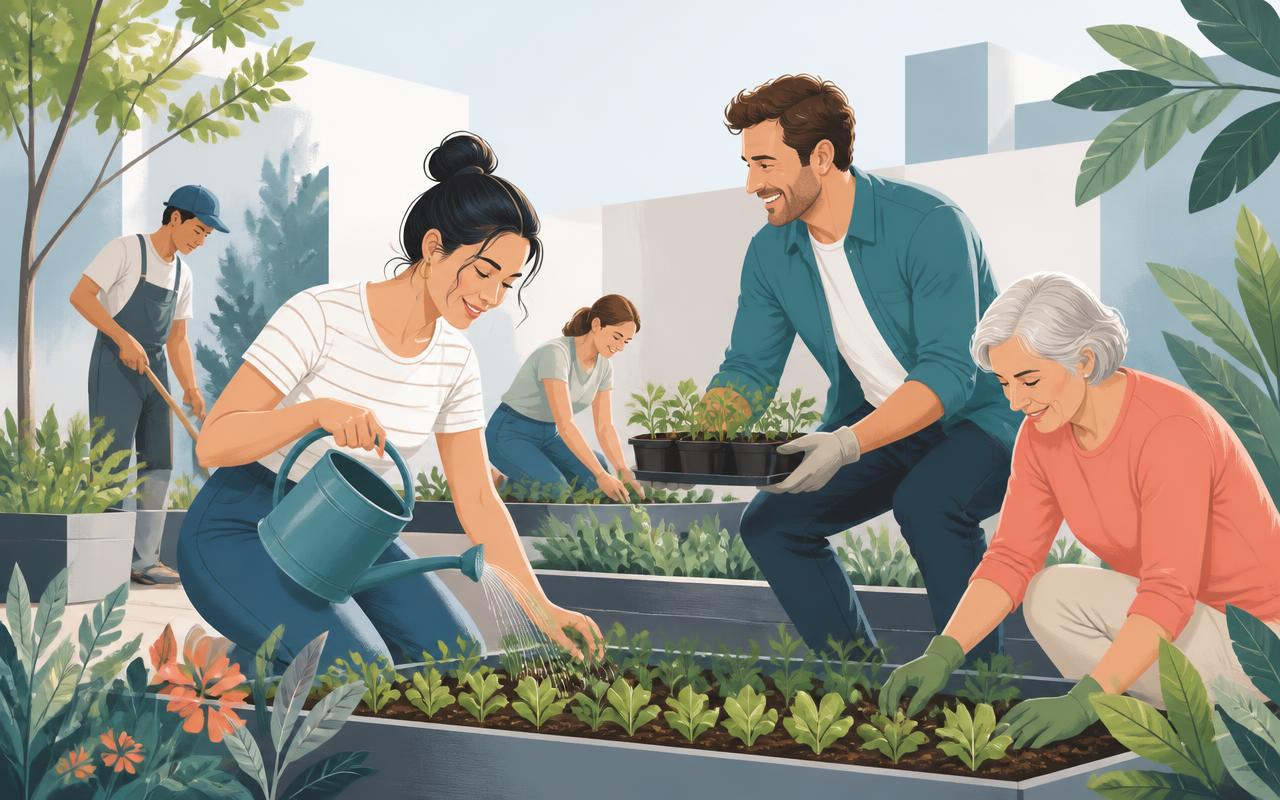
    A smiling person rolling up their sleeves in a sunlit workshop
    Plate On Ownership

    Trading excuses for the freedom that comes with full responsibility.

    Entry № 25

    Give up the excuses. Own the result, all of it.

    An excuse is a small comfort with a very high rent.

    The explanation

    Every excuse is a transaction: you trade a piece of your power for a piece of relief. The relief is real and short. The loss of power is real and permanent. People who actually move things in their lives do something almost embarrassing: they take responsibility for outcomes that were only partly their fault, because that is the only stance from which anything can be changed.

    The story

    I was leading a project that was, by any honest measure, failing. Deadlines had slipped, two key engineers had left, and the partner team had gone dark on us.

    A confident person standing tall in a field of wildflowers under blue sky
    Plate On Authenticity

    Letting go of the need for applause so your real voice can speak.

    Entry № 26

    Give up the need for approval. Be one hundred percent you.

    Applause is a poor compass.

    The explanation

    Trying to be liked by everyone is a slow way to become no one. Every time you shave a corner off yourself to fit a room, you also lose the part of yourself that a different, truer room was waiting for. Speaking your truth costs you the approval of people who were never really yours, and earns you the company of people who are.

    The story

    For almost a decade I gave conference talks I thought people wanted to hear. I studied what got applause. I softened my opinions. I sanded off the corners. The talks did fine. Nobody hated them. Nobody remembered them either.

    Friends laughing together around a warmly lit outdoor table at golden hour
    Plate On Boundaries

    Choosing your circle on purpose — who you stand near, you become.

    Entry № 27

    Give up toxic people. Stand near those who push you up.

    You become the average of the five voices nearest your ear.

    The explanation

    You cannot out-discipline a circle that quietly wants you small. The people you spend the most time with set the invisible thermostat of what feels normal, possible, and worth attempting. Leaving relationships that drain you is not cruelty. It is hygiene. And the empty chairs do not stay empty for long — they get filled by people who clap when you grow.

    The story

    In my late twenties I had a Sunday-night dinner group I had loved since college. Six of us, always the same table, always the same waiter. Slowly, over years, the tone had shifted. Anyone who mentioned an ambition got teased until it wilted.

    A peaceful person watching gentle ocean waves at sunrise
    Plate On Acceptance

    Making peace with what cannot be rewritten so you can live forward.

    Entry № 28

    The past cannot be changed. It can only be accepted.

    What you refuse to accept, you carry.

    The explanation

    We spend astonishing amounts of energy editing scenes that already played. The conversation we wish we had handled differently, the chance we wish we had taken, the loss we wish had not happened. None of it bends. Acceptance is not approval; it is putting the weight down so your hands are free for what is in front of you. The past becomes the soil, not the cage.

    The story

    After a long relationship ended badly, I spent the better part of a year rehearsing arguments with a person who was no longer in the room. In the shower, on the subway, walking to work — the same three or four sentences, delivered slightly better each time, to an absent audience

    Two pairs of hands gently planting a small green seedling in sunlit soil
    Plate On Discernment

    Reading people by what they do, not what they say.

    Entry № 29

    People may not tell you how they feel — their actions will.

    Believe the pattern, not the promise.

    The explanation

    Words are cheap to produce and easy to mean in the moment. Actions cost something — time, attention, follow-through — and so they reveal what is actually being prioritized. When someone's words and actions disagree for long enough, stop arguing with the words. The actions are the truth; the words are the wallpaper.

    The story

    I had a colleague — call him Marcus — who was warm, generous with praise, and always, always told me he had my back. In private he would text after difficult meetings: 'you were right in there, I'll say something next time.' In public, the something never came.

    An open book on a sunlit wooden table beside a warm cup of tea
    Plate On Reason

    Knowing when a conversation is no longer a conversation, and stepping away.

    Entry № 30

    Arguing with the unreasonable is medicine for the dead.

    Some conversations end before they begin.

    The explanation

    Reason is a shared instrument. When the other person has set it down — when they are arguing to win, to wound, or to perform — no amount of better logic from you will pick it up again. Walking away is not defeat; it is recognizing that the door is painted on the wall. Save the conversation for someone still inside the room.

    The story

    I once spent almost four hours of a Saturday night in a comment thread with a stranger I will call Bill. It had started over a small, verifiable factual claim in an article we had both read. I was, I decided, going to be a good citizen of the internet — patient, sourced, polite.

    A single yellow leaf resting on a still pond, creating small ripples that reach the shore.
    Plate On Growth

    What we must release — comforts, bonds, identities — in order to rise.

    Entry № 31

    Transformation is less about breaking walls and more about opening doors you previously kept locked.

    The loudest change often begins with the softest permission.

    The explanation

    We often treat transformation as a violent act—a shattering of the old self. But genuine growth is usually a series of quiet permissions. It is the moment you stop punishing yourself for a mistake made years ago, or the moment you allow yourself to be a beginner at something you've always wanted to try. When we lower the internal noise of 'should,' we create space for what is. Progress doesn't require a fanfare; it only requires the willingness to move toward the light of a new habit without demanding immediate perfection. It is the accumulation of these small, silent consents that eventually alters the landscape of a life.

    The story

    For nearly fifteen years I told anyone who asked, and myself most of all, that I was 'not a morning person.' It was a whole identity — a small brave flag I planted in the ground to justify why I stayed up until 2 a.m.

    An old wooden bookshelf with one empty space where a single candle burns bright.
    Plate On Focus

    The hidden cost of switching contexts, and the quiet power of one thing at a time.

    Entry № 32

    The quality of your work is determined by the distractions you were willing to ignore.

    What you leave out defines the strength of what stays in.

    The explanation

    Efficiency is often mistaken for doing more in less time, but true focus is about the elegance of exclusion. Every 'yes' is a hidden 'no' to a hundred other possibilities. To do one thing deeply, you must be willing to let dozens of good ideas wither on the vine so that one great idea can bear fruit. This is the discipline of the edited life. It requires a certain ruthlessness to protect your time from the 'merely good.' When we stop trying to fill every gap in our schedule, the things we choose to keep begin to take on a weight and clarity that was previously impossible.

    The story

    One March, in a burst of ambition I later diagnosed as fear, I decided to launch three things at once: a small consulting practice, a podcast, and a paid newsletter. Each of them, on its own, would have been a full quarter of work.

    A weathered stone wall where the mortar has been replaced by soft, green moss.
    Plate On Openness

    Showing your weakness first — the shortcut to being trusted in return.

    Entry № 33

    Vulnerability is not a leak in your armor; it is the evidence that you are brave enough to go without it.

    Softness is the only thing that can survive the hard edges of others.

    The explanation

    We are taught that strength is a shield—stiff, unyielding, and impenetrable. But a shield eventually cracks under repeated blows. True resilience is more like water or moss; it absorbs, adapts, and continues. When we lead with vulnerability, we aren't showing weakness; we are showing that we are secure enough to be seen. Choosing openness in a world that rewards posturing is a radical act. It invites others to put down their own heavy armor. By showing your hands are empty of weapons, you create the only environment where genuine trust can take root.

    The story

    The stakes in that board meeting were as high as they get for our small company. Two of our largest investors were in the room. I had spent a week preparing a deck that walked through our next year's plan with the confidence of a general on the eve of a decisive battle.

    A pair of hands cupping a small, glowing ember in the dark.
    Plate On Kindness

    The compounding interest of small, unrepaid acts of care.

    Entry № 34

    The most meaningful things you do are the ones that will never show up on a receipt.

    Care is a currency that doubles every time it is spent.

    The explanation

    Kindness is often viewed as a transaction, but its real power lies in its unpredictability. A small act of care given to someone who cannot possibly repay you does something to the atmosphere of a community. It signals that people are seen for more than their utility or their status. These acts act as a 'social lubricant,' reducing the friction of daily life. When you help someone without an invoice in your heart, you are building a reservoir of goodwill that sustains everyone, including yourself, during the leaner seasons of the soul.

    The story

    In my old apartment building there was an elderly man on the ground floor — Mr. Osei — who came back every afternoon from a long, slow walk with his groceries in a small canvas bag.

    An hourglass filled with coarse sand, with a single green sprout growing from the bottom.
    Plate On Patience

    The long view, where compounding does what hurry cannot.

    Entry № 35

    Patience is the calm acceptance that things happen in their own time, provided you keep showing up.

    Nature does not hurry, yet everything is accomplished.

    The explanation

    We live in a culture of the 'now,' but most things of lasting value require the 'not yet.' Patience is not a passive waiting; it is an active endurance. It is the understanding that the most significant results come from the compounding of small, invisible efforts over a long horizon. When we try to rush a process, we usually just break it. Whether it's building a career, a friendship, or a skill, we must respect the gestation period. The person who can wait while working is a person who can eventually own the mountain.

    The story

    In my mid-thirties I decided, for reasons I still can't entirely explain, to learn the second movement of a Chopin nocturne. I had played piano casually as a child. I was, at the start of this, comfortably mediocre.

    A mountain peak partially obscured by clouds, with a clear path visible in the foreground.
    Plate On Starting

    Permission to begin badly, because beginning badly is still beginning.

    Entry № 36

    You don't need to see the top of the mountain to take the first step into the woods.

    The map is a guess, but the step is a fact.

    The explanation

    Overthinking is a form of procrastination disguised as maturity. We wait for the 'perfect' plan, the 'right' moment, or the 'complete' signal. But clarity is a consequence of movement, not a prerequisite for it. You cannot steer a car that isn't moving. By starting badly, you gather the data you need to eventually do it well. Action burns through the fog of anxiety. The moment you take a step, however small, the world shifts to show you the next one. Trust the process of discovery over the illusion of certainty.

    The story

    I told people I was 'working on a novel' for five straight years. What I was actually doing was buying beautiful notebooks, drawing character maps, reading books about how to write books, and rearranging a Scrivener project that never contained more than an outline.

    A silhouette of a person standing on a bridge, looking at the water flowing beneath.
    Plate On Acceptance

    Making peace with what cannot be rewritten so you can live forward.

    Entry № 37

    Acceptance is the quiet realization that the past has no more lessons to give—only weight to carry.

    You cannot swim in the same river twice, nor would you want to.

    The explanation

    Regret is the attempt to ghostwrite a past that has already been published. We waste immense energy wondering 'what if,' not realizing that the version of us who lived those moments could not possibly have known what we know now. Acceptance is the bridge between the person you were and the person you are becoming. To live forward, you must stop trying to negotiate with the past. Making peace with a mistake or a missed opportunity isn't about liking it; it's about acknowledging that it is a fixed point. Once you stop trying to change the unchangeable, your energy returns to the present.

    The story

    In my late twenties I started a small company with two friends. It failed spectacularly in eighteen months — the specific, humiliating kind of failure that involves personal debt, awkward emails to investors, and a quiet, permanent shift in how your parents ask about your work.

    A heavy iron key resting on a plain wooden table.
    Plate On Honesty

    Facing what we'd rather look away from — the small admissions that keep us soft.

    Entry № 38

    Being honest with yourself is the only way to ensure your feet are actually on the ground.

    The hardest door to unlock is the one you pretend isn't there.

    The explanation

    We all have 'shadow folders'—parts of our lives or character we refuse to look at. Honesty is the process of opening those folders. It isn't just about not lying to others; it's about the more difficult task of not lying to ourselves about our motivations, our fears, and our failures. This internal rigorousness is what keeps a soul flexible. When we admit our small envies or our minor hypocrisies, they lose their power over us. The truth doesn't just set you free; it simplifies your life significantly. You no longer have to remember which version of yourself you're supposed to be.

    The story

    There was a friend, Sara, whom I had known since college. Over about a year I had, without quite noticing, become impossible to schedule with her. Every one of her invitations found me legitimately, provably busy. Deadlines. Family stuff. A weekend I had to catch up on sleep.

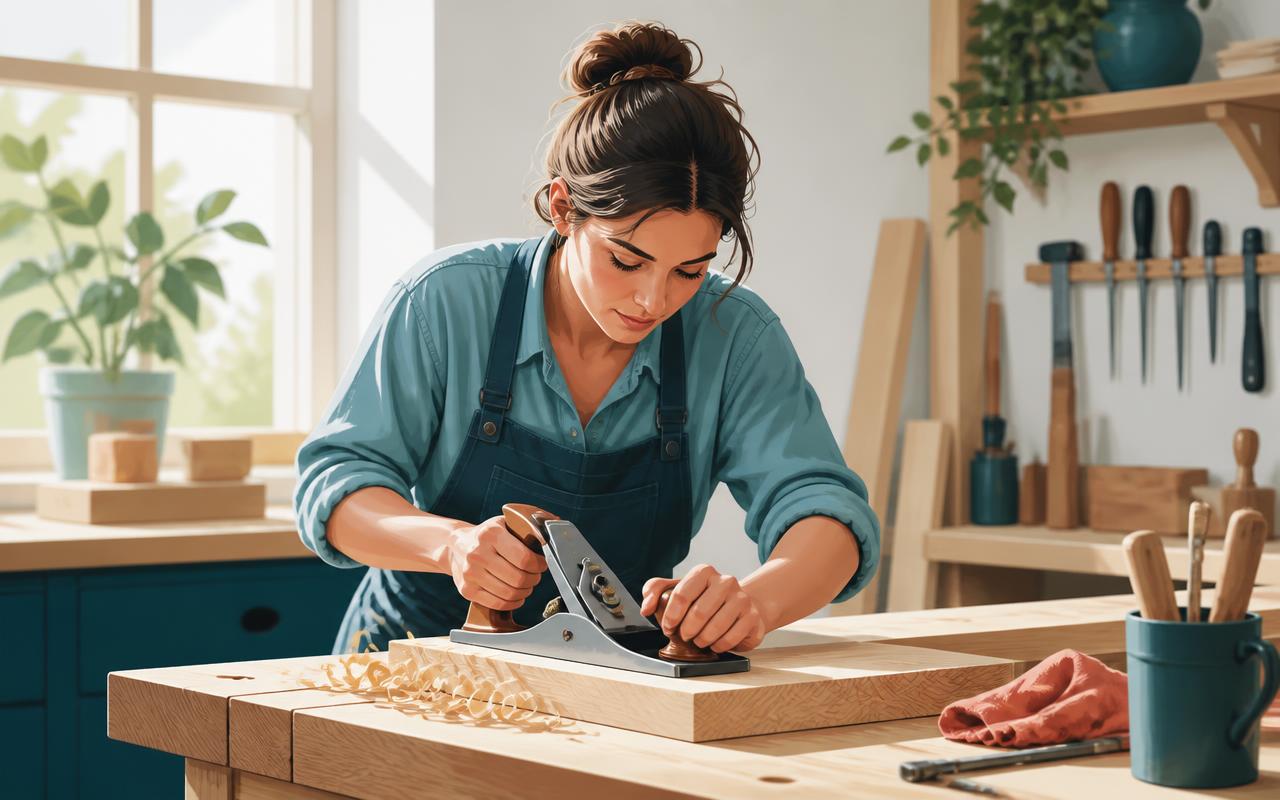
    A carpenter's plane smoothing a rough piece of oak, with golden shavings falling.
    Plate On Ownership

    Trading excuses for the freedom that comes with full responsibility.

    Entry № 39

    The difference between a job and a craft is the amount of yourself you are willing to leave behind in the work.

    The work reveals the worker, and the worker reveals the intent.

    The explanation

    We often search for 'purpose' as if it's a hidden treasure buried in a field. In reality, purpose is something we bring to the task, not something we find within it. Any job, no matter how menial, becomes a craft when approached with an ownership mindset. When you take full responsibility for the outcome—regardless of the circumstances—you reclaim your agency. You are no longer a victim of the 'system' or 'bad luck.' You are an active participant in your own life. Ownership is the trade of excuses for the power to change.

    The story

    My first real job was washing dishes in the basement of a small restaurant in a college town. Twelve dollars an hour, no windows, a spray hose that soaked me by the end of every shift. I hated it. I told everyone I hated it. My resentment was so thick you could have plated it.

    An empty chair facing a wide window overlooking a pine forest in the mist.
    Plate On Listening

    Letting other people's feelings exist without rushing to cap or fix them.

    Entry № 40

    Listening is not the absence of speech; it is the presence of attention.

    The quietest room in the house is where the most important things are said.

    The explanation

    Listening is the most underrated leadership skill. Most people listen with the intent to reply, not the intent to understand. They are simply waiting for the other person to stop making noise so they can resume their own. True listening involves creating a vacuum that the other person feels safe filling. When you allow someone else's feelings to exist without rushing to fix, judge, or minimize them, you are giving them the gift of their own dignity. It is in these silent gaps that the most important information—the 'unspoken'—finally surfaces. To listen is to let the other person become real to you.

    The story

    My friend Hana called me on a Sunday afternoon, in the aftermath of a hard breakup, and asked if she could come over. She arrived twenty minutes later with red eyes and a container of leftover pad thai.

    Two friends on a box cricket court at sunset, respectfully discussing a rule with open body language.
    Plate On Disagreement

    How a good argument, held with respect, can deepen trust instead of damage it.

    Entry № 41

    A healthy argument is not a crack in a relationship; it is how the light gets in.

    Two people can hold different truths and still hold each other.

    The explanation

    Disagreement is often treated as a threat, but in a healthy relationship it is a form of intimacy. When two people argue well, they are saying: I care enough about this — and about you — to stay in the tension instead of walking away. The goal is not to win; it is to understand. Sometimes one person learns from the other. Sometimes both perspectives remain intact, and the only victory is the mutual decision to respect the distance between two minds. That respect, repeated over time, becomes the bedrock of trust.

    The story

    Sarvan and Sankar were playing box cricket one Sunday morning when a close call turned into a disagreement over a wicket. From where Sarvan stood, it was clearly out. From where Sankar stood, it clearly wasn't. Neither budged at first. Then something shifted.